What to Consider in a Handrail for the Elderly

They call it the golden years. When life starts to slow down, you can appreciate the little things in life. One thing that may slow down is mobility.
What is the Best Materialfor a Handrail for the Elderly?
For this, you may feel stuck in the “illusion of choice”. This is when there are too many options, so, you ultimately don’t decide or feel unsure of your choice.
Let’s simplify it for you (pun slightly intended). There’s wood and metal for railings. Now, all these have their benefits, but let’s go through the pros and cons of each.
Galvanized Steel
- Pros: They last a long time, corrosion-resistant, can be powder coated which is more effective than painting. Easy to grab on to for better stability during use.
- Cons: Requires a metal blade to cut to size. However, this can be avoided with the proper measuring and purchasing a pre-sized handrail kit.
Aluminum
- Pros: Naturally rust-resistant, great for all types of weather and locations. Similar to galvanized steel, it’s easy to grab on to during use.
- Cons: Can be expensive, limited pipe fittings availability, harder to weld if you plan on welding, also requires a metal blade to cut, but can also be avoided with measuring and purchasing a handrail kit.
Wood
- Pros: Doesn’t get as cold as metal and is cheaper.
- Cons: Weak material that is prone to rotting and needs consistent maintenance like staining. Harder to grab onto and could lead to splinters.
All this needs to be considered when buying and installing a handrail. This is why we advocate for metal pipe and fittings handrails.
What Type of Handrail Do the Elderly Need?
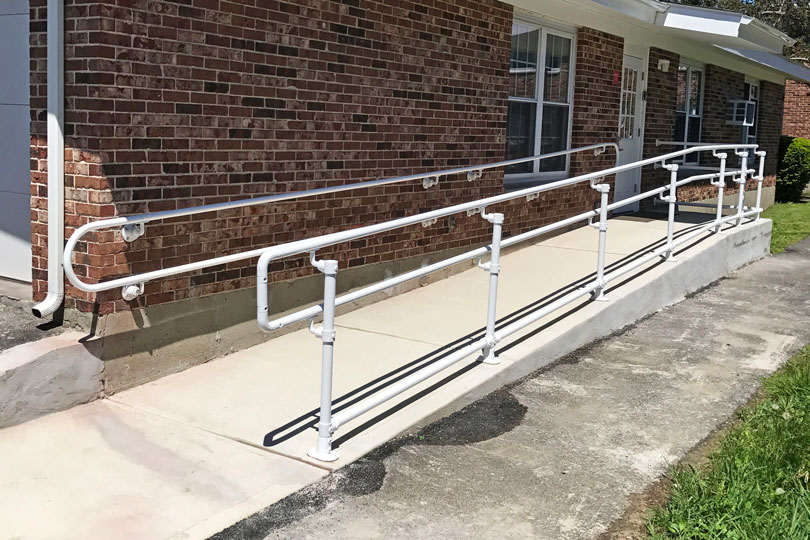
Now, what do I mean by type? We just discussed material, what more do you need to know?
Is your handrail for a stair or a ramp?
Do you need a smooth and continuous handrail?
Do you want an offset or inline handrail?
Do you need handrails on both sides of a stair or ramp?
Now, do you need handrails on both sides of a stair or ramp? It depends. I know that’s not the answer you’re looking for but let me explain.
Retrofit a Handrail to an Existing Railing
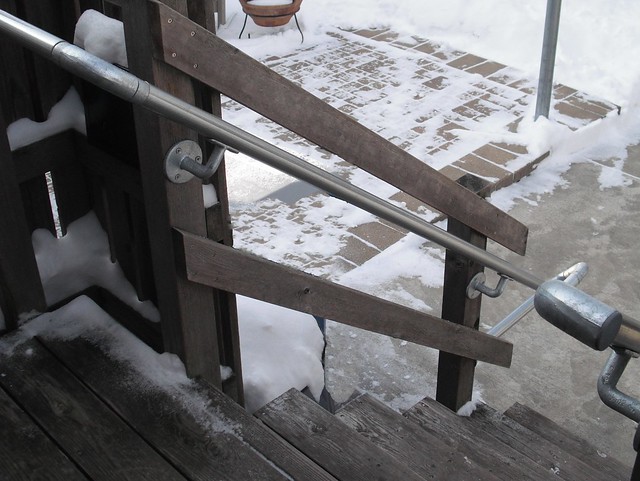
I’ve discussed multiple different materials and types of handrails to install from scratch. But what if you have an existing wood or composite handrail that just isn’t cutting it anymore?
Well, what if I told you that you can keep your current wood or composite railing and retrofit a metal handrail to it? Pretty neat, right?
Retrofitting a metal handrail to an existing railing is an excellent solution because you get to keep your current railing while upgrading the handrail. This creates an easier railing to grab on to while keeping the look of your old railing.
Where Do You Need to Install a Handrail for the Elderly?
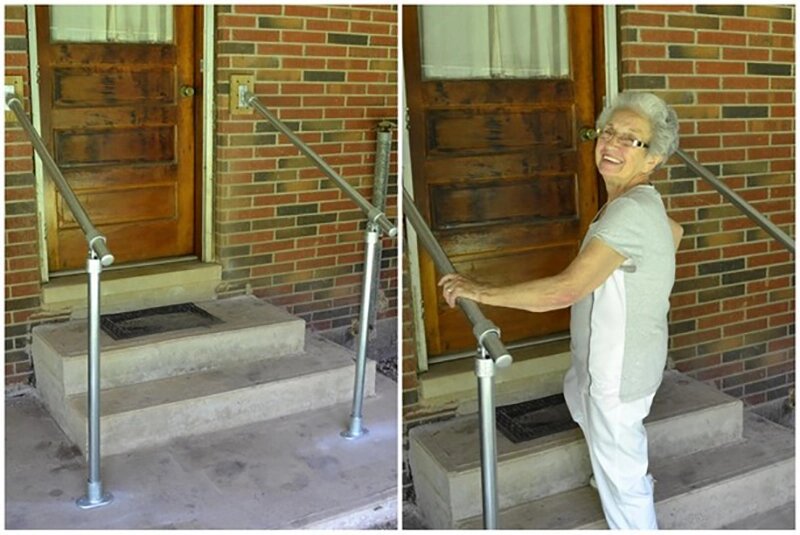
Location, location, location. There are lots of places to install a handrail. Various places throughout a home could use a railing to ensure you or your loved one is safe. A few places include:
- Front Steps
- Interior Garage
- Porch
- Inside Steps
- Garden
How to Install a Sturdy Handrail for the Elderly
Everything we’ve discussed are various ways to improve the mobility of elderly people around their home. And all of this boils down to stability and sturdiness.
Someone who is relying on their handrail to keep them upright needs to have a high level of trust in their railing. So here are a couple of tips to help increase stability.
Install your base flanges perpendicular to your stairs or ramp. While a base flange can go either parallel or perpendicular. Installing them perpendicular will create a sturdier base for your handrail.
Install a shorter handrail or have shorter distances between posts. Having a shorter gap between posts will help with stability. We recommend not going over 6 feet between posts to maintain stability, but the shorter the better.
In Review
These are just a few things to consider when buying and installing a handrail for the elderly. If you have any additional questions about our handrail kits or specific customizations you’re looking for, please reach out to our project specialists!