ADA-Compliant Handrails for Schools: Building Safe and Accessible Campuses

Schools play an incredible role in shaping the future by providing spaces where students can learn, grow, and feel supported.
Every day, educators and staff work hard to create welcoming environments where all members of the school community can thrive.
Why ADA Compliance Matters for Schools

Every school serves students and staff with a variety of needs. Some individuals may use wheelchairs or walkers, while others may have temporary injuries or simply need extra support navigating stairs or ramps.
ADA-compliant handrails are designed to provide secure, reliable assistance in these situations. Beyond meeting federal regulations, these features communicate that a school is a welcoming environment where all members of the community can participate fully and safely.
Key ADA Railing Dimensions and Requirements

The ADA sets forth specific guidelines to make sure handrails are functional and universally accessible. A few regulations that schools should pay close attention to are:
- Handrail Height: Railings must be placed between 34 and 38 inches above the walking surface, ensuring that they are usable by children, teenagers, and adults alike.
- Grip Size: Handrails must be continuous and easy to grasp, with a circular cross-section diameter of 1.25 to 2 inches. This design makes it easier for people of all ages to securely hold on.
- Wall Clearance: There must be a minimum of 1.5 inches of space between the handrail and the wall or any surface it’s mounted on. This prevents hands or clothing from being caught.
- Extensions: Handrails should extend at least 12 inches beyond the top and bottom of a ramp or stairway run, offering additional stability for individuals beginning or finishing their climb.
- Continuity: Handrails must run continuously without interruptions along the length of stairs or ramps, so users always have a steady point of support.
Types of ADA Handrails for Schools
Surface-Mounted ADA Stair Railings

Surface-mounted railings are anchored directly into the ground at both the top and bottom of the staircase, providing a sturdy and reliable solution.
Wall-Mounted ADA Railings

Wall-mounted handrails are commonly used indoors, particularly in hallways, stairwells, and classrooms with raised platforms, but can be used virtually anywhere a mounted railing is needed.
Because they attach directly to the wall, they save valuable floor space while still offering dependable support.
ADA Wheelchair Ramps and Ramp Railings

Wheelchair ramps and handicap ramp railings are an essential feature for schools, ensuring that students, staff, and visitors with mobility challenges can access classrooms, auditoriums, and athletic facilities.
According to ADA guidelines, any ramp with a rise greater than 6 inches must include railings on both sides. These railings not only provide support for wheelchair users but also help those with walkers, crutches, or other mobility assistances.
The two different solutions for wheelchair ramps to ensure they are ADA compliant are retrofitting handrails on an existing ramp or building a new one from the ground up.
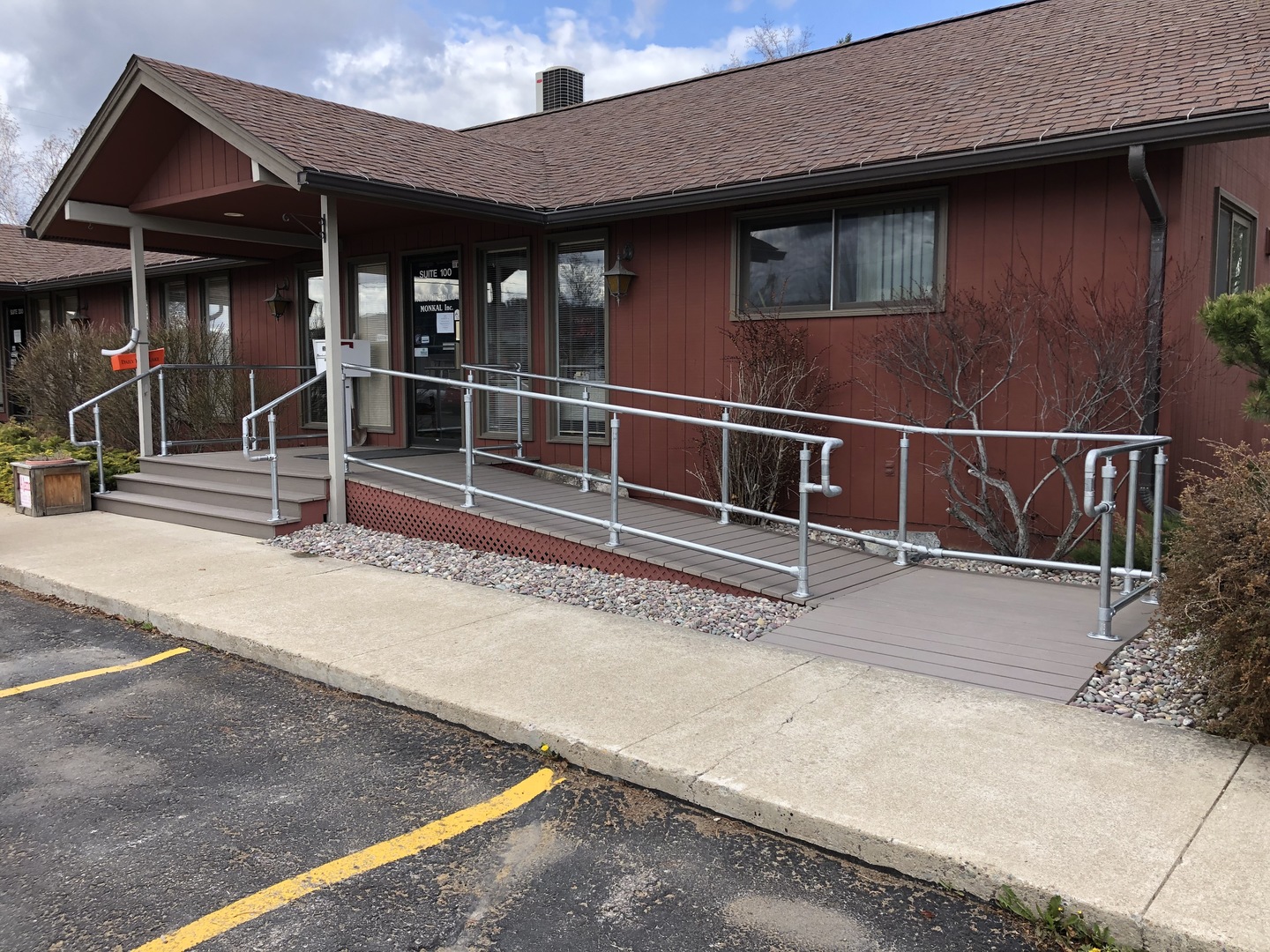
We offer various sizes and styles of ADA-compliant ramp handrails that can be installed on an existing ramp or wall to create a safe and compliant railing system for your students and staff.
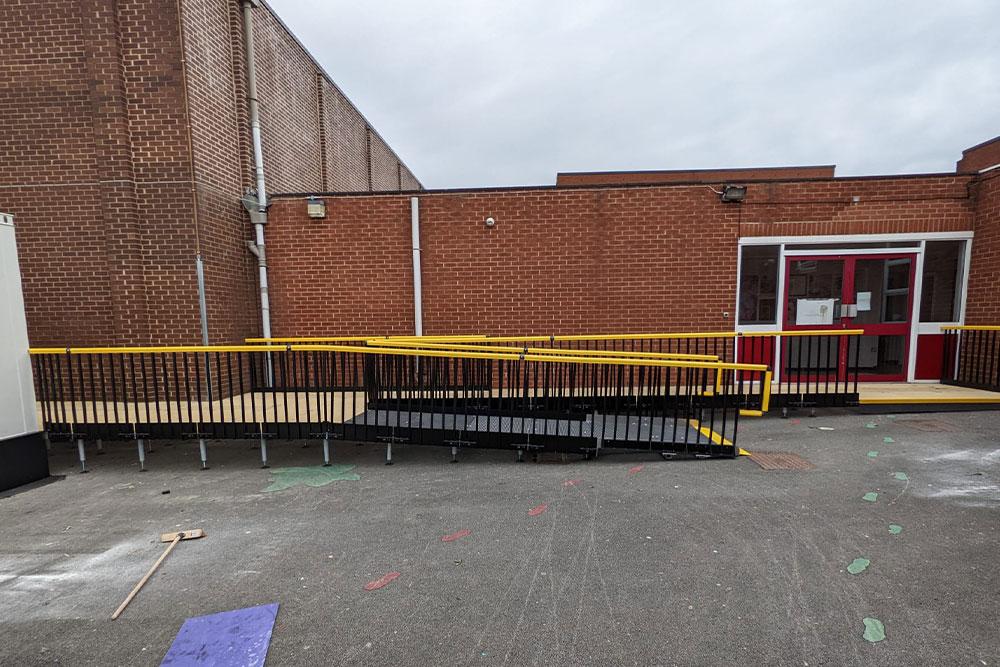
We also have ADA-compliant wheelchair ramps that don’t require any massive construction plans other than basic assembly of the wheelchair ramp system.
Creating Inclusive and Safe Learning Environments
When schools invest in ADA-compliant handrails and ramp systems, they go beyond meeting minimum requirements; they actively create a culture of safety and inclusivity.
Students who feel supported in their mobility are better able to focus on learning, while staff and visitors gain confidence in navigating the campus without barriers.
If you’re looking to install new ADA railings in your school, check out our collection of ADA-compliant handrails that you can order today.
If you have additional questions or are looking for a custom ADA-handrail solution, contact our team of project specialists who have helped thousands of schools and businesses achieve ADA compliance.